Mother Terasawa is a Japanese comedian whose reading-group events bring philosophical argument into conversation with everyday life. These Japanese-language volumes preserve the movement of a live discussion: explanations, questions, jokes, misunderstandings and the effort to think again. The subjects range from Plato and modern political thought to manga, anthropology and the writing of a fellow comedian. Published by TRASHBOOKS, the series makes sustained reading a form of performance in its own right.
17 VOLUMES
First Series
The first series comprises seventeen volumes. Its range extends from love and liberty to reason, madness, cultural taste and the experience of time. Classical texts share the programme with manga and a fieldworker’s private diary. Many lectures unfold through exchanges with the comedian Shimada Dāyo; everyday examples and the audience’s presence remain part of the thinking.
SERIES 1 / VOLUME 01
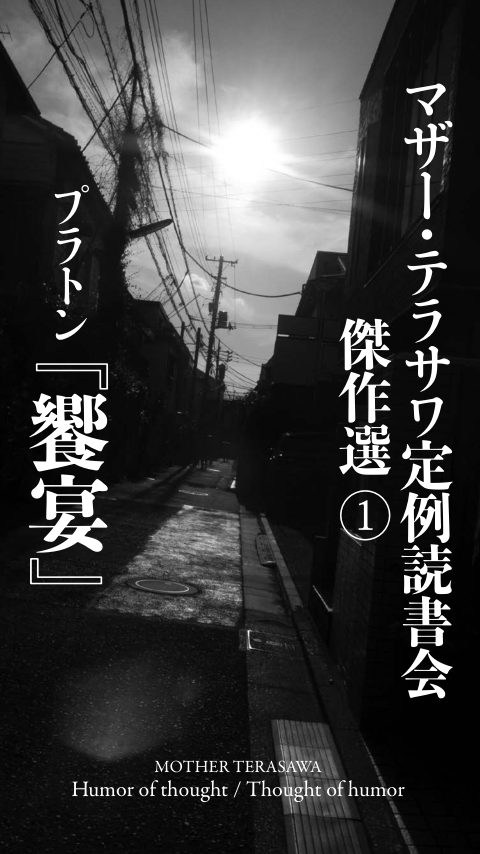
Symposium
Plato
饗宴/プラトン
A drinking party becomes a setting for competing accounts of love. Mother Terasawa introduces Plato through the life and death of Socrates, then follows the speakers of the Symposium as they praise and dispute eros. The exchange with his assistant turns the order of speeches into something like a live performance: each contribution responds to what came before. Questions about desire, virtue and the pursuit of something beyond immediate gratification emerge from a conversation punctuated by jokes and everyday comparisons.
SERIES 1 / VOLUME 02
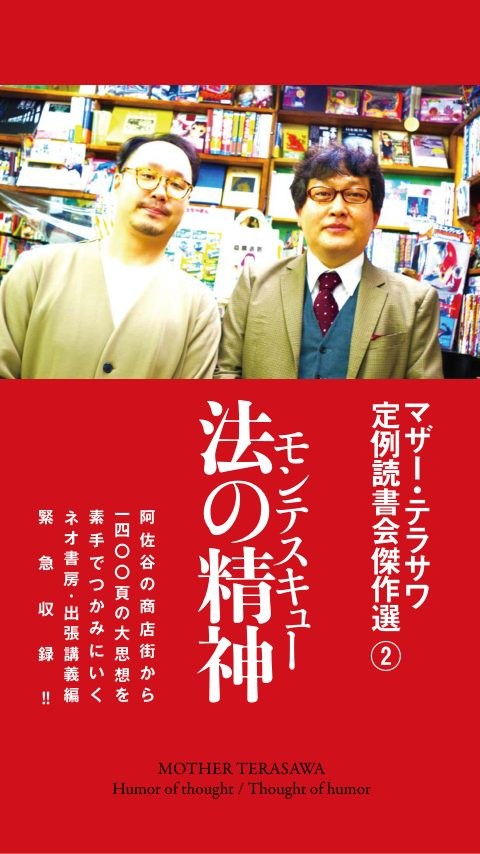
The Spirit of the Laws
Montesquieu
法の精神/モンテスキュー
Recorded at Neo Shobō, a secondhand bookshop in Asagaya, this volume brings a sprawling work of political thought into a small neighbourhood space. Mother Terasawa begins with the shop’s history and Montesquieu’s life before examining how laws relate to forms of government and the societies they govern. Montesquieu’s account of Japan offers a particularly revealing case: an unfamiliar country becomes an object of political judgement through reports received at a distance. The lecture asks how inherited concepts continue to organise ordinary political understanding.
SERIES 1 / VOLUME 03
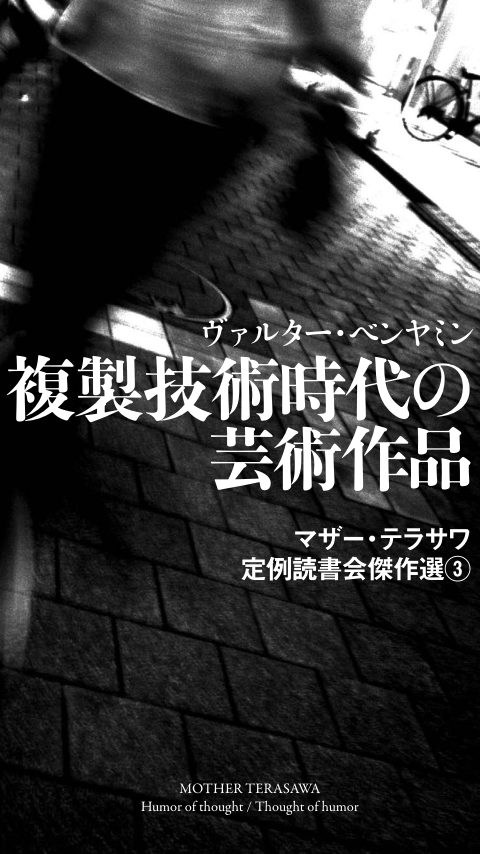
The Work of Art in the Age of Mechanical Reproduction
Walter Benjamin
複製技術時代の芸術作品/ヴァルター・ベンヤミン
What changes when a work of art can be reproduced? Mother Terasawa approaches Benjamin through comedy, painting, photography and the conventions by which audiences recognise a performance. Discussion of photographs leads from Atget to images shared on social media; the distinction between cult value and exhibition value opens up another way of thinking about what art does. The lecture connects Benjamin’s arguments with the conditions under which a particular expression becomes visible, intelligible or valuable to an audience.
SERIES 1 / VOLUME 04
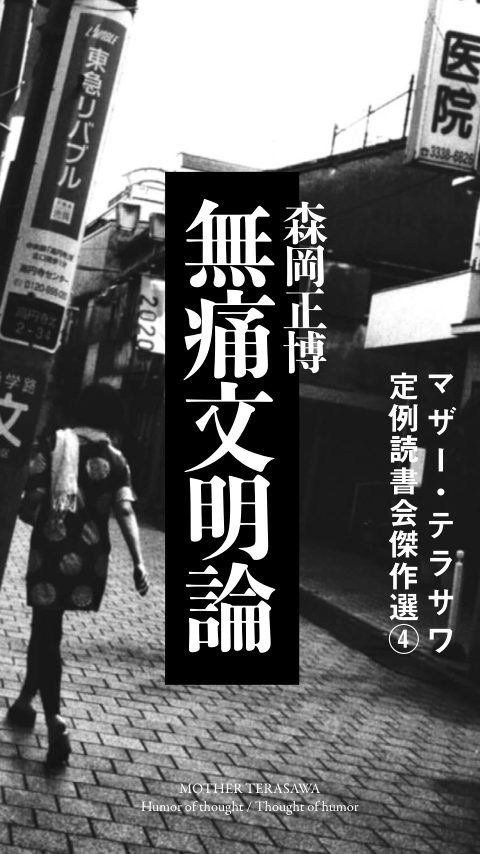
Painless Civilization
Masahiro Morioka
無痛文明論/森岡正博
An account of a nurse caring for an unconscious patient opens a discussion of the difference between remaining alive and experiencing the joy of living. Mother Terasawa follows Morioka’s distinction between bodily desire and a more demanding engagement with life. Comfort, convenience and the avoidance of pain appear as forces that can absorb even attempts to resist them. Everyday pleasures and the atmosphere of a festive city help bring the argument close to the audience: what becomes difficult to encounter when discomfort is continually removed?
SERIES 1 / VOLUME 05
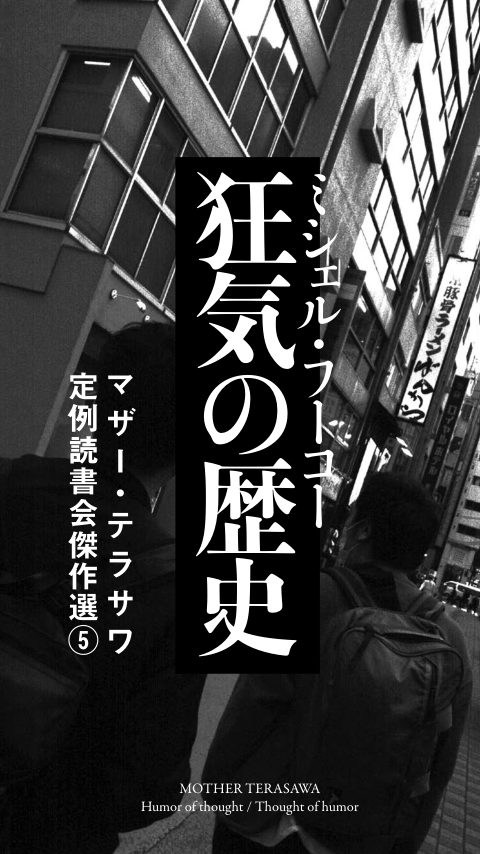
History of Madness
Michel Foucault
狂気の歴史/ミシェル・フーコー
The boundary between reason and madness becomes a way to question the image of the complete, rational individual. Mother Terasawa introduces Foucault’s concerns through institutions, social classification and the management of everyday life. Discussions of health insurance, smoking and bodily habits bring biopolitics into the room, while a return to Descartes examines what happens when reason establishes its own authority. The lecture asks how the people and behaviours excluded from a social order can expose the assumptions on which that order rests.
SERIES 1 / VOLUME 06
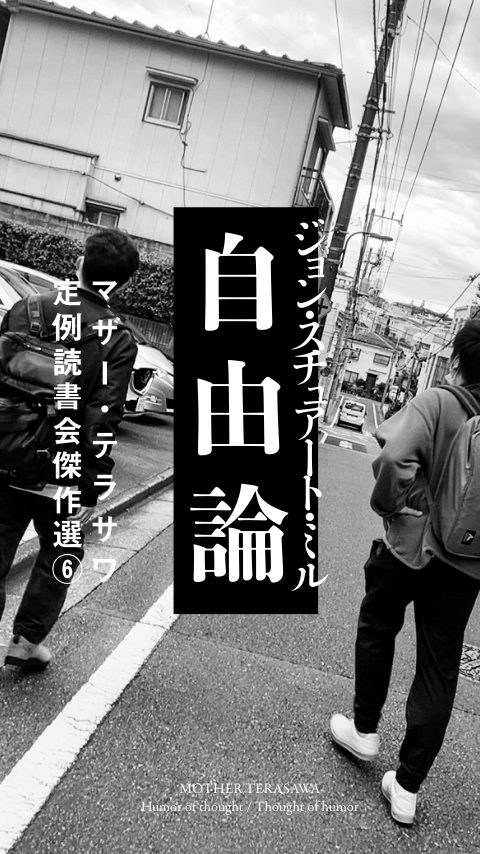
On Liberty
John Stuart Mill
自由論/ジョン・スチュアート・ミル
How far should society tolerate the freedom of an individual? Mother Terasawa distinguishes different senses of freedom and introduces the tension between liberalism and communal belonging. Mill’s arguments are tested against examples that make abstract commitments uncomfortable: alcohol, taxation, movement across borders and restrictions justified in the name of public safety. The back-and-forth with his assistant keeps returning to the practical boundary between personal choice and social control, including the point at which a person’s own preferences begin to shape a supposedly universal principle.
SERIES 1 / VOLUME 07
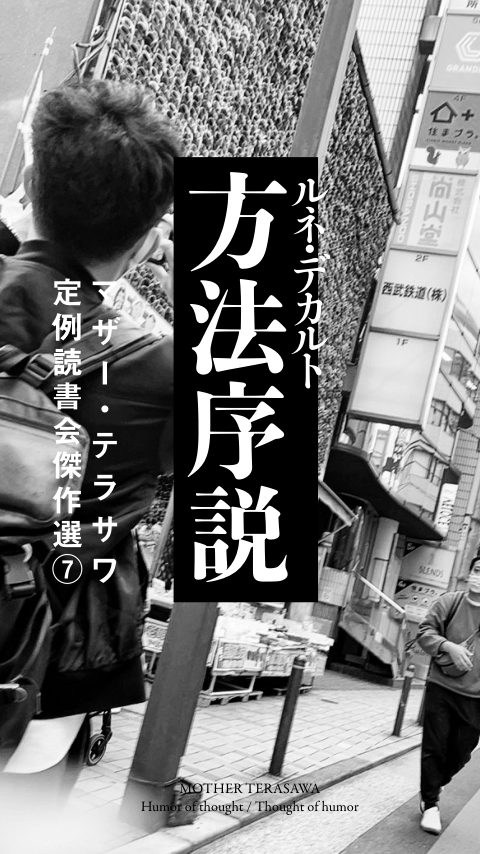
Discourse on Method
René Descartes
方法序説/ルネ・デカルト
‘I think, therefore I am’ is approached through the work of doubting and the historical pressures surrounding scientific inquiry. Mother Terasawa sets Descartes against the intellectual authority of scholasticism and a religious order that could punish challenges to its account of the world. Galileo’s trial and Descartes’s decision to withhold his own work become part of the discussion. The lecture links the formation of a method with the risks of speaking, publishing and claiming that something can be known with certainty.
SERIES 1 / VOLUME 08
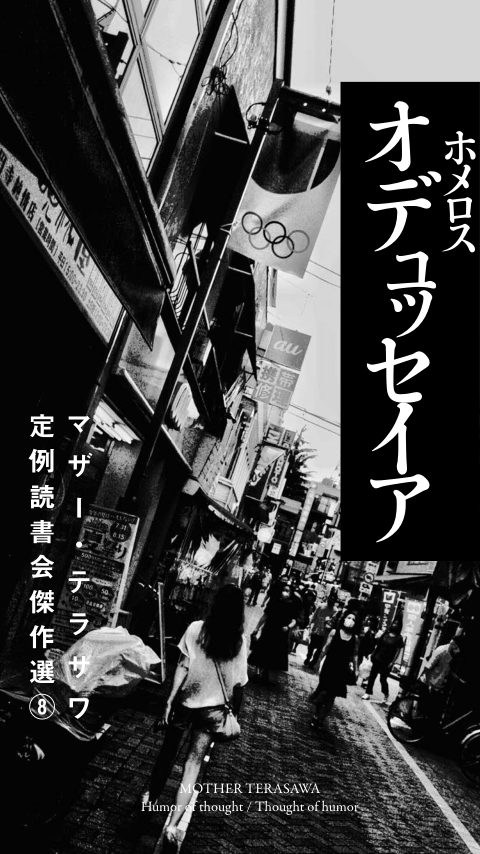
The Odyssey
Homer
オデュッセイア/ホメロス
Before following Odysseus home, Mother Terasawa asks how a story could be preserved and transmitted in the first place. The practical effort of recording words—finding a surface, making marks and carrying them to someone else—makes the survival of an ancient text newly tangible. The voyage then brings gods, human judgement, obedience and catastrophe into view. An apparently distant epic becomes a route into the conditions of storytelling and the uneasy relationship between human purposes and powers that people cannot control.
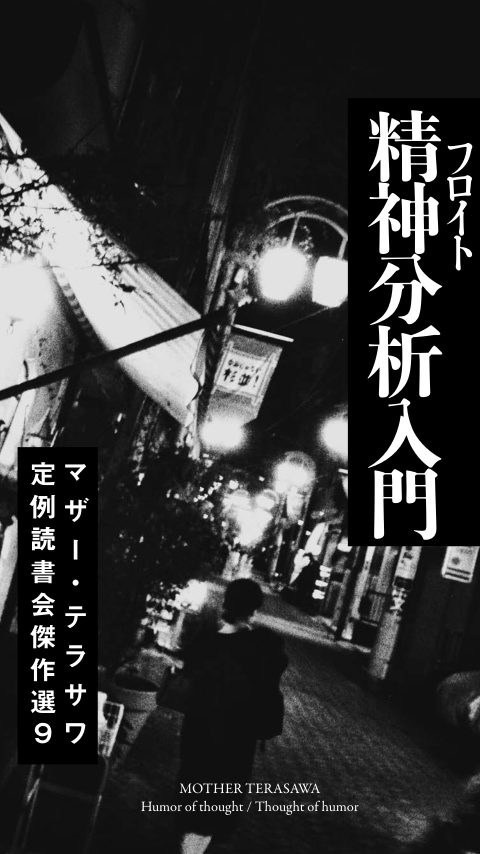
SERIES 1 / VOLUME 09
Introductory Lectures on Psychoanalysis
Sigmund Freud
精神分析入門/フロイト
Mistakes, dreams and neurosis become clues to a self that exceeds conscious intention. Mother Terasawa introduces Freud as a challenge to philosophical accounts that begin with an already coherent, rational person. The unconscious opens a different path: slips and desires that appear trivial or embarrassing may reveal how a person is organised. Exchanges with his assistant supply familiar examples while exposing the difficulty of treating oneself as an object of analysis. The lecture keeps Freud’s provocation in view rather than reducing psychoanalysis to a set of ready-made explanations.
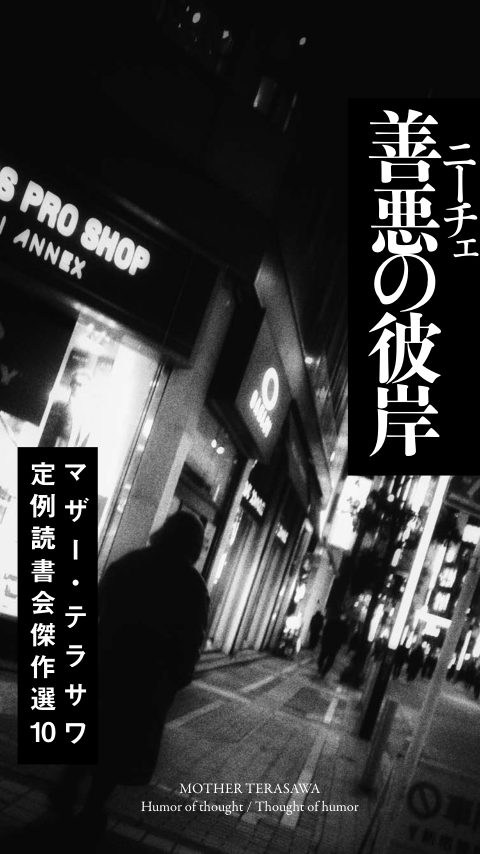
SERIES 1 / VOLUME 10
Beyond Good and Evil
Friedrich Nietzsche
善悪の彼岸/ニーチェ
Mother Terasawa places Nietzsche’s challenge to philosophy against the ambitions of German idealism and its pursuit of comprehensive accounts of reason and society. The lecture asks what is lost when a system treats people as if their motives were already understood. Utilitarian explanations and theories that arrange individuals within a finished social design become targets for scrutiny. Nietzsche’s writing is presented as an invitation to reopen questions that established intellectual frameworks have prematurely closed, including the question of who is doing the explaining.
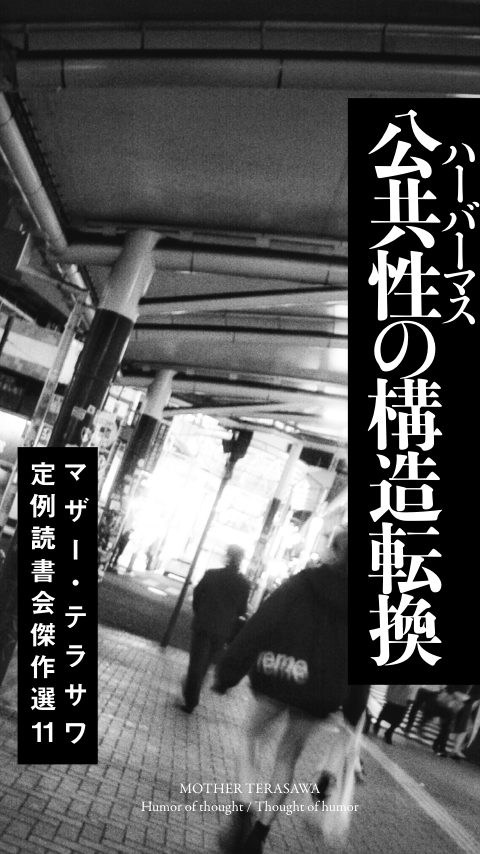
SERIES 1 / VOLUME 11
The Structural Transformation of the Public Sphere
Jürgen Habermas
公共性の構造転換/ハーバーマス
What do we mean when we call something ‘public’? Mother Terasawa traces the changing concept through political thought, the development of communications media and the relationship between private interests and collective life. Kant’s public use of reason becomes a point of entry into the demanding ideal of people who pursue their own freedom while participating in a shared world. The assistant’s doubts help expose the problem at the centre of that ideal: how can public discussion work among people who do not think alike?
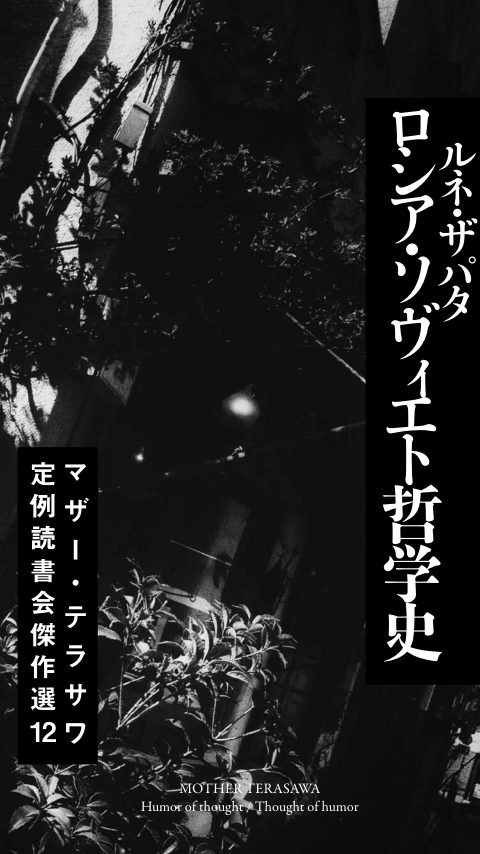
SERIES 1 / VOLUME 12
A History of Russian and Soviet Philosophy
René Zapata
ロシア・ソヴィエト哲学史/ルネ・ザパタ
Mother Terasawa introduces Russian thought through the relationships among religion, cultural identity, modernisation and political power. Discussion moves between the Orthodox tradition, the significance of Kyiv and disputes over whether a society should follow imported models or preserve its own values. Comparisons with Japanese modernisation make those conflicts more immediate. Marxism then enters through the distinction between materialism and idealism. The volume treats a history of philosophy as a history of arguments over what kind of society people believe they inhabit—and want to build.
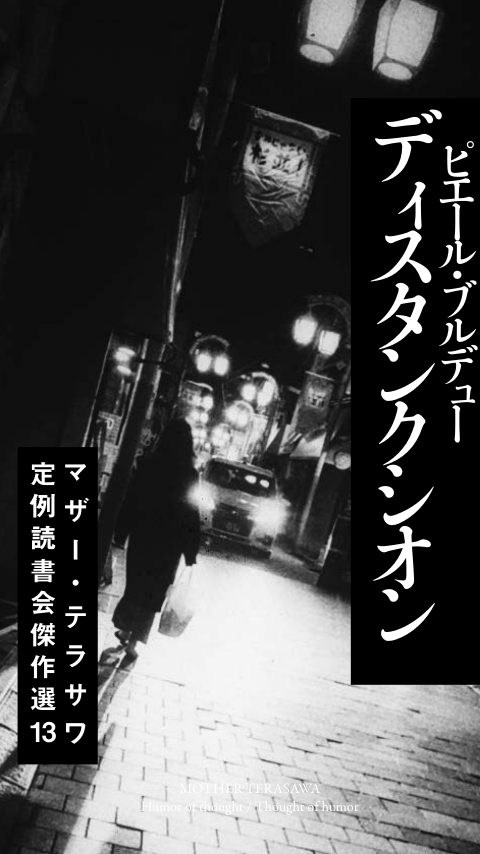
SERIES 1 / VOLUME 13
Distinction
Pierre Bourdieu
ディスタンクシオン/ピエール・ブルデュー
Taste is examined as something learned through a life rather than simply chosen in the moment. Mother Terasawa introduces Bourdieu’s work through his intellectual path and the concepts of cultural capital and habitus. The assistant’s hobbies, embarrassment about certain activities and encounters among comedians supply concrete material for the discussion. Small reactions reveal how different social histories can coexist and collide in the same setting. The lecture asks how people acquire a sense of what belongs to them—and what feels beyond their reach.
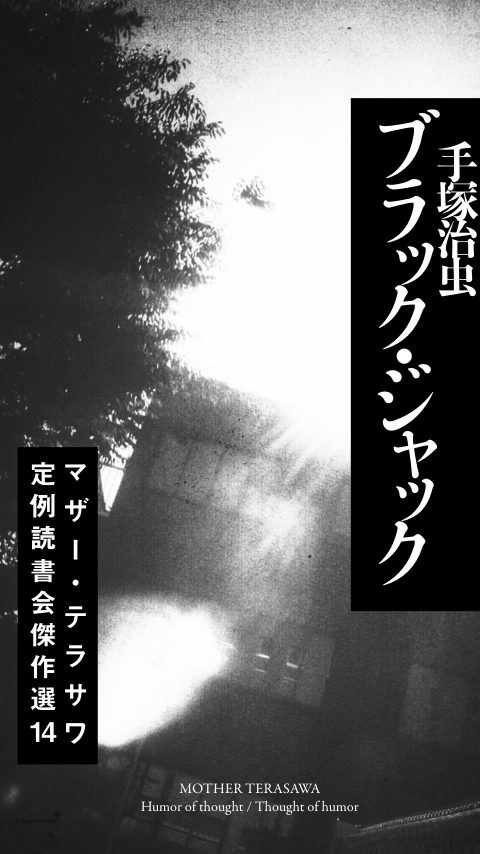
SERIES 1 / VOLUME 14
Black Jack
Osamu Tezuka
ブラック・ジャック/手塚治虫
A manga about an unlicensed surgeon opens questions that cannot be settled by identifying a single good or bad character. Mother Terasawa considers Tezuka’s techniques of storytelling alongside the ethical conflicts staged by Black Jack and Dr Kiriko. The drive to save a life meets arguments about suffering, prolonged treatment and the wishes of patients and families. As medical intervention becomes more powerful, judgement becomes harder. The lecture reads manga as a form capable of holding those incompatible demands together without resolving them too quickly.
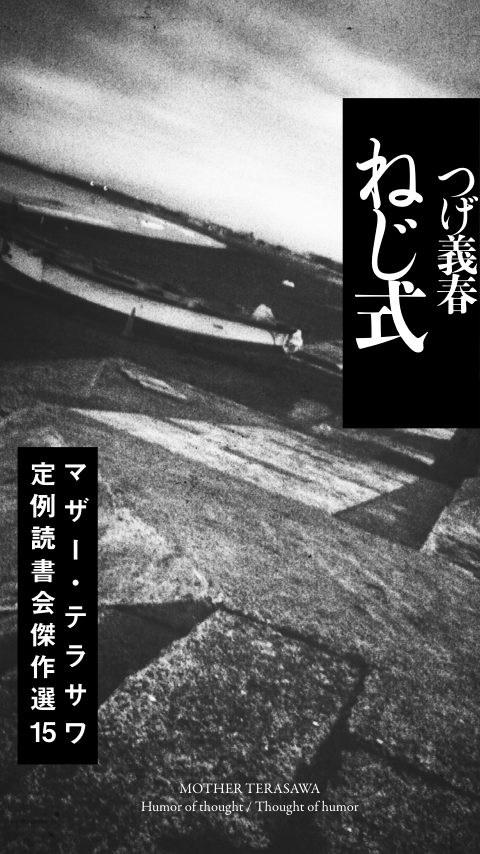
SERIES 1 / VOLUME 15
Screw Style
Yoshiharu Tsuge
ねじ式/つげ義春
Mother Terasawa follows Tsuge’s career, his connection with the magazine Garo and the distinctive landscapes and journeys of his manga before entering the disorienting world of Screw Style. The assistant is repeatedly asked to explain images that resist a stable account. Their attempts, disagreements and jokes turn interpretation itself into part of the event. The lecture explores what happens when readers encounter a work whose force survives their inability to say exactly what it means, bringing biography, dreams and visual storytelling into the discussion.
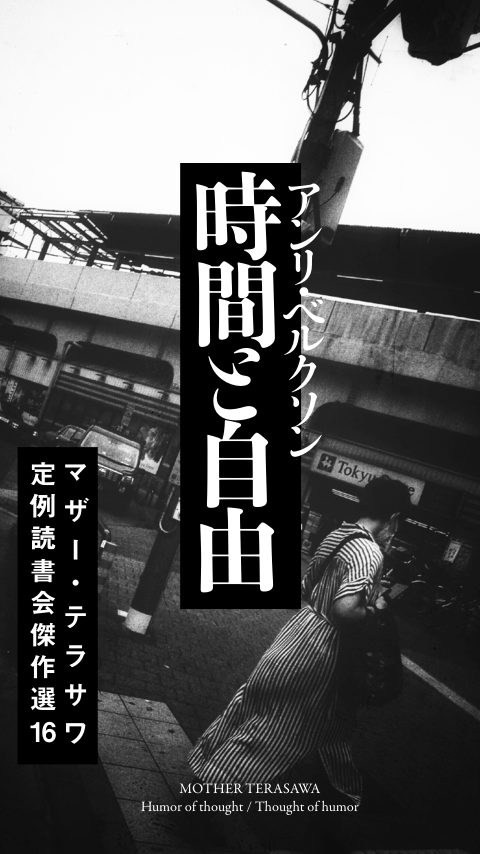
SERIES 1 / VOLUME 16
Time and Free Will
Henri Bergson
時間と自由/アンリ・ベルクソン
A day described simply as ‘a day off’ becomes an example of how language can flatten an experience. Mother Terasawa introduces Bergson’s challenge to the habit of measuring and dividing time as though it were a set of interchangeable units. The discussion moves between number, lived duration and literary expression, asking how an inner present can differ from the time registered by an external clock. Philosophy appears at the boundary between a sensation that is being lived and the words available to describe it.
SERIES 1 / VOLUME 17
A Diary in the Strict Sense of the Term
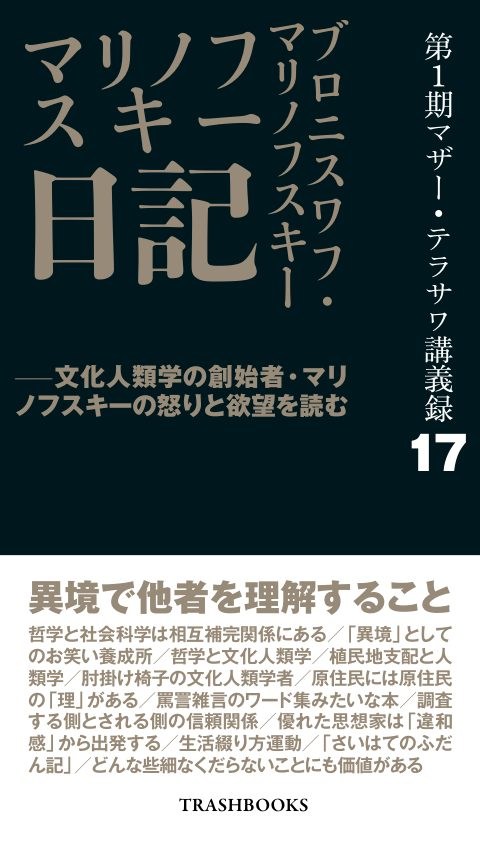
Bronisław Malinowski
マリノフスキー日記/ブロニスワフ・マリノフスキー
An anthropologist’s private anger, loneliness and sexual desire interrupt the composed image of the observer. Speaking without his regular assistant, Mother Terasawa considers the conditions of fieldwork and anthropology’s relationship with colonial power before reading Malinowski’s diary as the record of a vulnerable, contradictory person. The encounter with an unfamiliar environment places scholarly ambition beside discomfort and frustration. This volume asks what an account of everyday weakness can reveal about the act of understanding others and the position from which that understanding is produced.
7 VOLUMES
Second Series
The second series opens with a conversation with Tokidoki Iwashi about her own writing, then turns to the emperor system, political antagonism, religion, collective will, colonialism and debate. Seven volumes are available in this catalogue’s November 2026 selection. Six further volumes appear separately as an announced programme for 2027.
SERIES 2 / VOLUME 01
It’ll Hatch Eventually
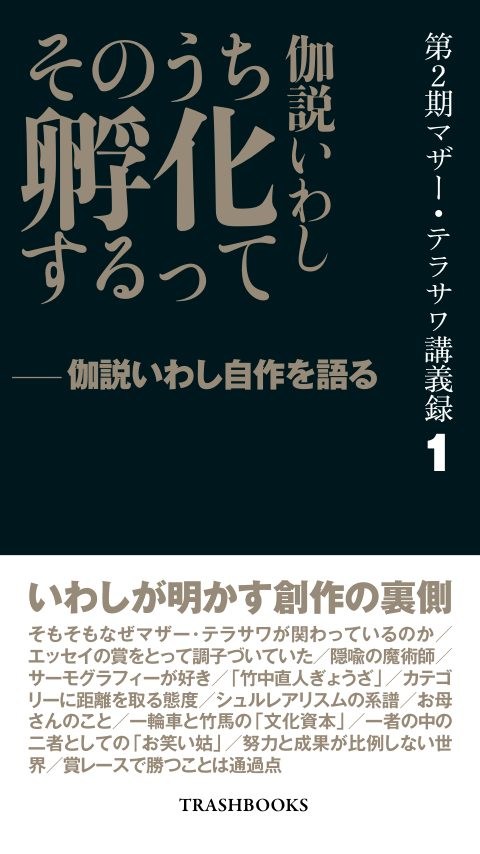
Tokidoki Iwashi
そのうち孵化するって/伽説いわし
This special conversation brings the author into the reading group. Tokidoki Iwashi of Niboshi Iwashi discusses her essay collection with Mother Terasawa at Neo Shobō, moving through the making of the book, metaphor, family and the boundary between lived experience and invention. Topics range from thermography to the cultural capital of stilts and unicycles. The discussion also considers comedy competitions and a world in which effort does not reliably produce results. Iwashi’s own account of writing remains at the centre of the volume.
SERIES 2 / VOLUME 02
The Principles of Domination in the Emperor-System State
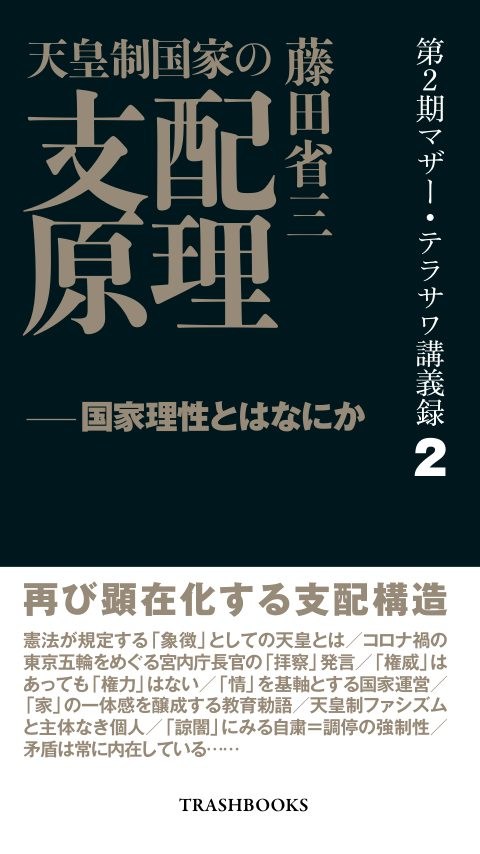
Shōzō Fujita
天皇制国家の支配原理/藤田省三
Recorded during the pandemic and the Tokyo Olympics, this lecture reads Fujita’s analysis of the emperor system through contemporary patterns of authority and compliance. Mother Terasawa distinguishes authority from political power and asks how emotional identification, the image of the family and the language of voluntary restraint can organise collective behaviour. An official’s attempt to speak about the emperor’s presumed concerns becomes a concrete point of entry. The question is how a structure of domination can continue to operate through people who experience their actions as their own.
SERIES 2 / VOLUME 03
The Concept of the Political
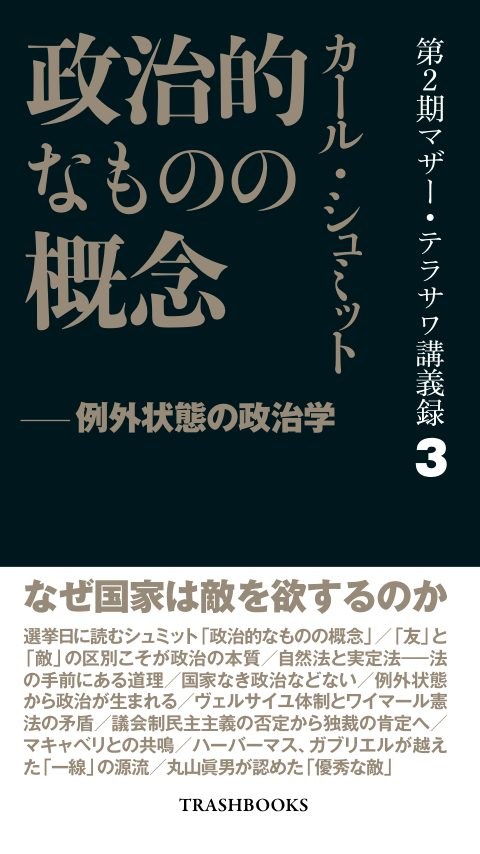
Carl Schmitt
政治的なものの概念/カール・シュミット
Recorded on a Japanese general-election day, this lecture confronts Schmitt’s distinction between friend and enemy and the role of the state of exception. Mother Terasawa traces the attraction of these arguments through the political conflicts of interwar Germany, while keeping Schmitt’s association with Nazism in view. The discussion then turns to contemporary intellectuals and their responses to war and division. Schmitt becomes an unsettling instrument for asking how people committed to reason can nevertheless draw a boundary beyond which another person is treated as an enemy.
SERIES 2 / VOLUME 04
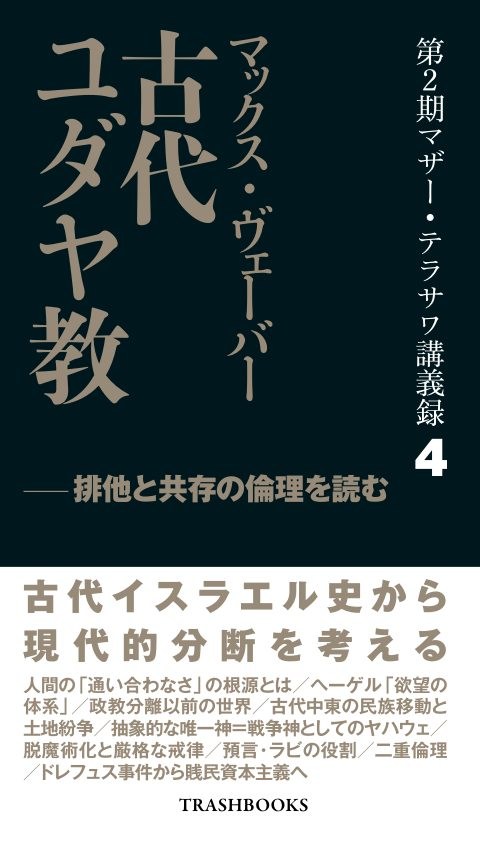
Ancient Judaism
Max Weber
古代ユダヤ教/マックス・ヴェーバー
Mother Terasawa approaches Weber through the formation of a religious community, its rules and its relations with outsiders. Ancient Middle Eastern conflicts, the abstraction of a single god, disenchantment, prophecy and the work of rabbis provide the route into the argument. The lecture considers the tension between maintaining a distinct ethical order and living alongside other communities, including Weber’s account of different standards applied within and beyond a group. Religion and economic life become connected questions in a wider inquiry into why people fail to understand one another.
SERIES 2 / VOLUME 05
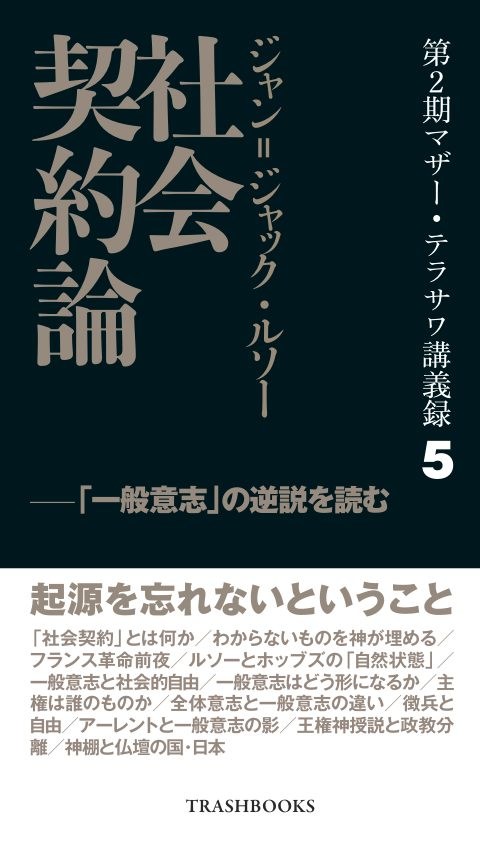
The Social Contract
Jean-Jacques Rousseau
社会契約論/ジャン=ジャック・ルソー
A theory intended to overcome arbitrary rule becomes a question about the people it leaves out. Mother Terasawa distinguishes Rousseau’s general will from the sum of private interests, then asks what happens to those who cannot join the collective will. Conscription, conscientious objection and Arendt’s analysis of totalitarianism bring the difficulty into focus. A second thread examines religion, political authority and Japan’s reception of modern institutions. Recorded during the pandemic, the lecture reads a theory of living together at a time when people were being required to keep apart.
SERIES 2 / VOLUME 06
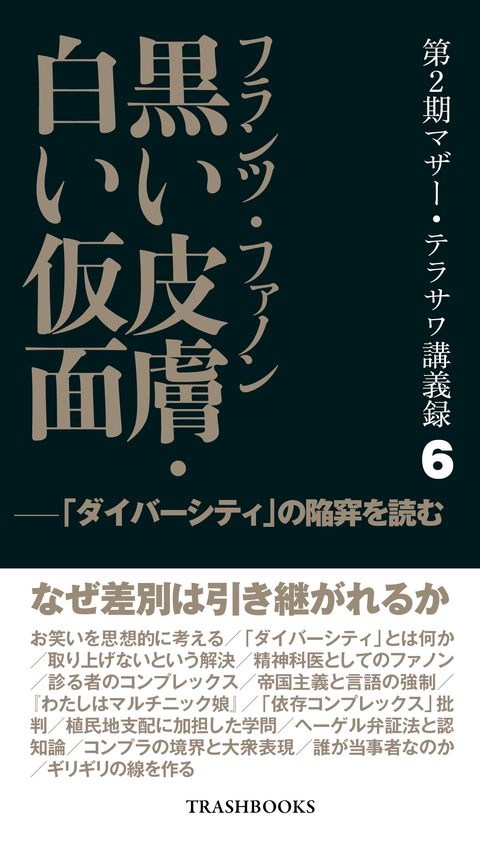
Black Skin, White Masks
Frantz Fanon
黒い皮膚・白い仮面/フランツ・ファノン
A controversy over a comedian’s racist remark provides the starting point for a close examination of what the language of ‘diversity’ explains—and what it can conceal. Mother Terasawa reads Fanon’s account of colonial language, internalised hierarchy and the psychological sciences that helped sustain domination. He also makes his own position as a Japanese male comedian part of the inquiry. The discussion asks who can speak, who is recognised as directly affected and how public expression might confront discrimination instead of merely avoiding the subject.
SERIES 2 / VOLUME 07
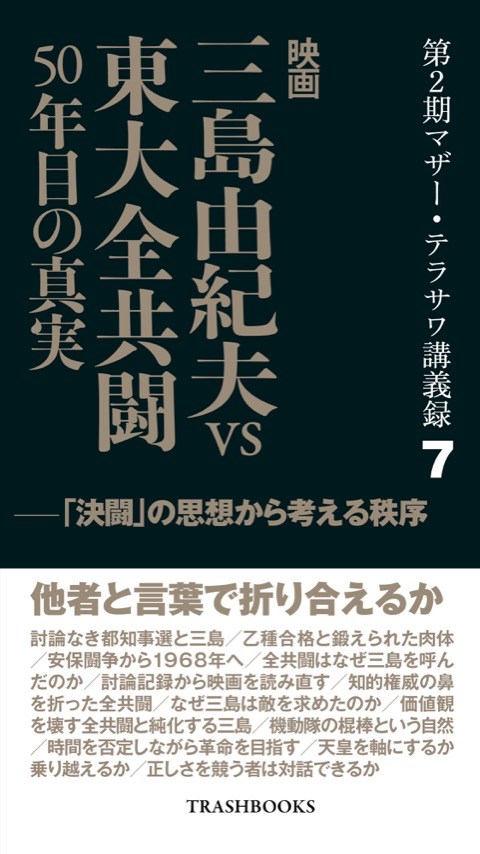
Mishima: The Last Debate
A documentary on Yukio Mishima and the University of Tokyo Zenkyōtō
三島由紀夫vs東大全共闘 50年目の真実/映画
The 1969 encounter between Mishima and radical students becomes a test of whether opponents can make room for one another through words. Mother Terasawa reads the documentary alongside the debate record, comparing Mishima’s pursuit of cultural purity with the students’ attempt to break inherited values. Their incompatible positions on the emperor remain central, as do questions of violence, time and revolution. Recorded on the day of a Tokyo gubernatorial election, the lecture asks what is lost when public life no longer provides even a setting for disagreement.
SECOND SERIES · FORTHCOMING
Announced Programme
Schedule recorded in November 2026.
Vol.
Work
Author
Scheduled publication
8
Politics as a Vocation職業としての政治
Max Weber
January 2027
9
Meditations自省録
Marcus Aurelius
March 2027
10
The Origins of Totalitarianism全体主義の起源
Hannah Arendt
May 2027
11
Existentialism Is a Humanism実存主義とは何か
Jean-Paul Sartre
July 2027
12
Leviathanリヴァイアサン
Thomas Hobbes
September 2027
13
Nicomachean Ethicsニコマコス倫理学
Aristotle
November 2027
This catalogue introduces the lectures and conversations in the Japanese editions. English renderings of titles identify the works discussed; the Japanese titles are retained for reference. Planned volumes are listed by title only. TRASHBOOKS · November 2026