TRASHBOOKS · JAPANESE-LANGUAGE MAGAZINE

HIMA 暇

Second Series · An English Catalogue

ISSUES 14–26 / NOVEMBER 2024–NOVEMBER 2026
DOWNLOAD PDFEnglish catalogue · 8 pages · 1380 KB

HIMA (暇) is a Japanese-language magazine published by TRASHBOOKS and edited and published by Kentaro Sugimoto. Its second series brings reporting on people and places around Atsugi into conversation with comedy, literature, philosophy, political economy and technology. These thirteen entries introduce issues 14–26, including the Khmer cuisine special issue. English titles are descriptive translations; the original Japanese titles are retained for reference.

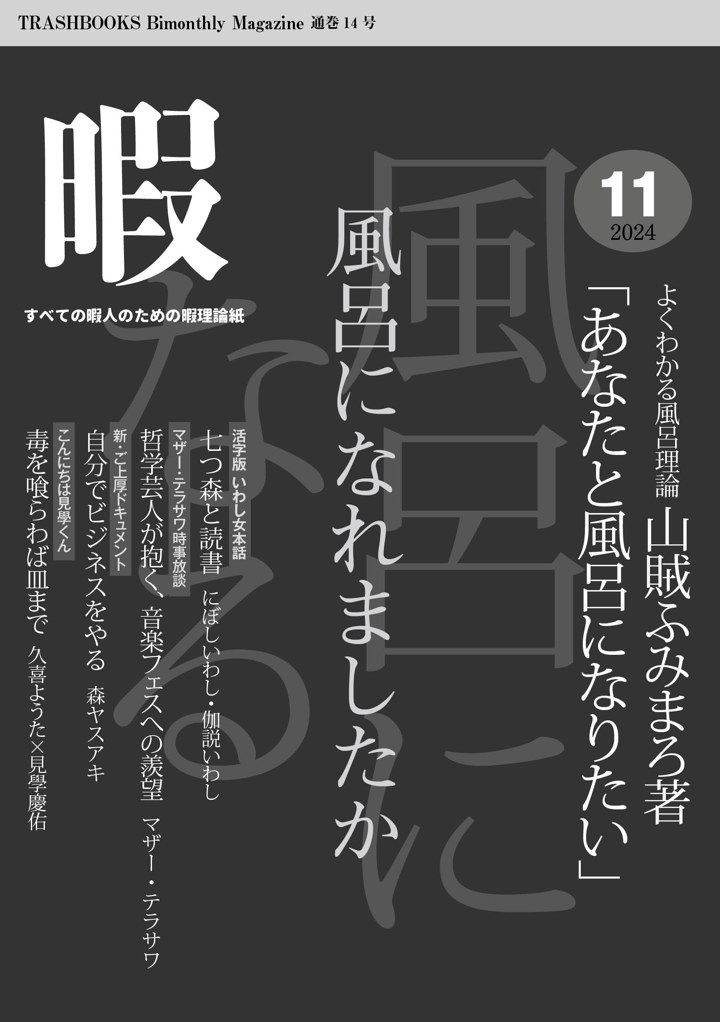
Front cover of HIMA, issue 14
NO. 14 November 2024

Becoming a Bath

What does it mean to ‘become a bath’? This issue introduces a concept developed by Sanzoku Fumimaro among musicians around Atsugi: a way of letting one’s guard down and encountering others without the usual social armour. Kentaro Sugimoto traces its prehistory through encounters in his home and at the Atsugi bus terminal, bringing everyday absurdity into conversation with Jacques Derrida’s account of hospitality. Essays, correspondence and commentary place this local vocabulary within a wider discussion of art, sociability and the individual.
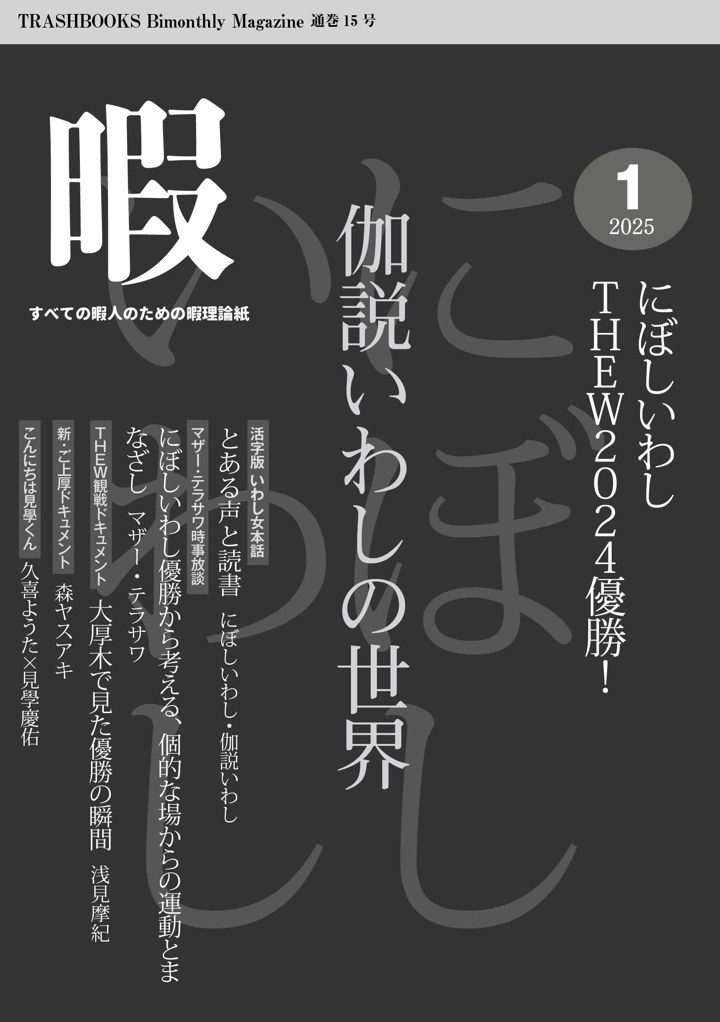
Front cover of HIMA, issue 15
NO. 15 January 2025

The World of Tokidoki Iwashi

An introduction to the writing of Tokidoki Iwashi of the comedy duo Niboshi Iwashi, published in the wake of the duo’s victory at THE W 2024. The issue considers how her prose moves between ordinary experience, fantasy and fiction. In ‘A Certain Voice and Reading’, she imagines a future in which unwanted voices can be blocked out entirely—and asks what happens to chance encounters and personal growth. Contributions by Mother Terasawa and other writers explore the relationship between her literary voice and her work as a comedian.

Front cover of HIMA, issue 16
NO. 16 March 2025 · Special issue

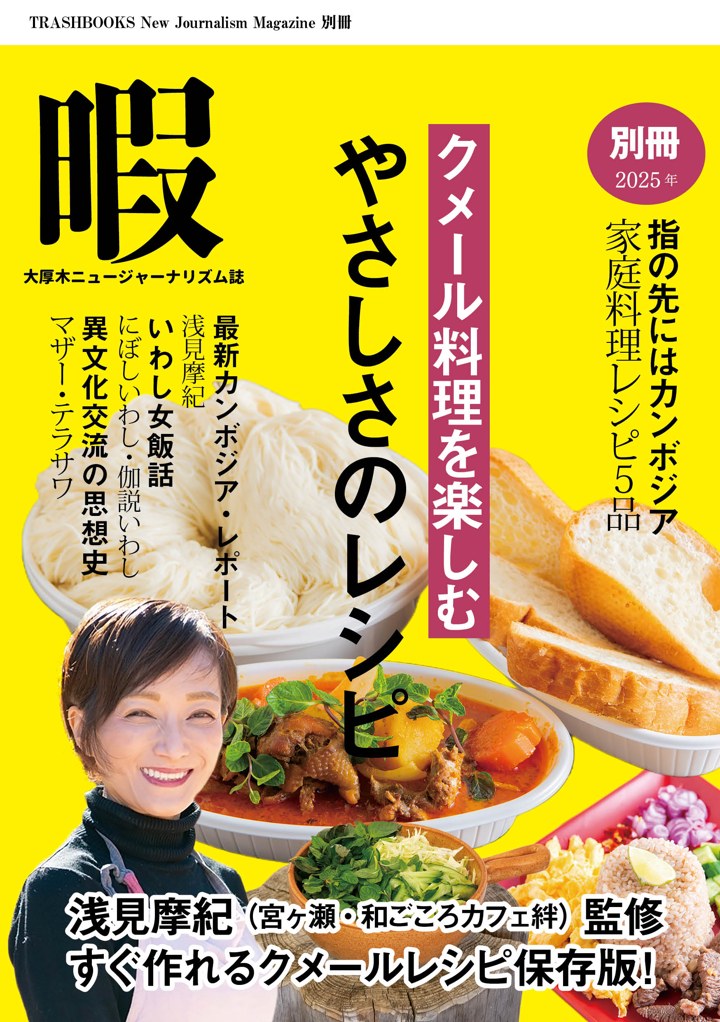
Enjoying Khmer Cuisine: Recipes of Kindness

Maki Asami introduces Cambodian cooking through recipes that bring its flavours within reach of Japanese home cooks. Dishes include curry with thin noodles and lok lak, accompanied by guidance on ingredients, preparation and the use of aromatic herbs and seasonings. The collection grows out of her visits to Cambodia through nonprofit activities. Alongside the recipes, a critical essay considers food, cultural exchange and Japanese assumptions about other Asian societies. Cooking becomes a practical point of contact with people and histories beyond Japan.

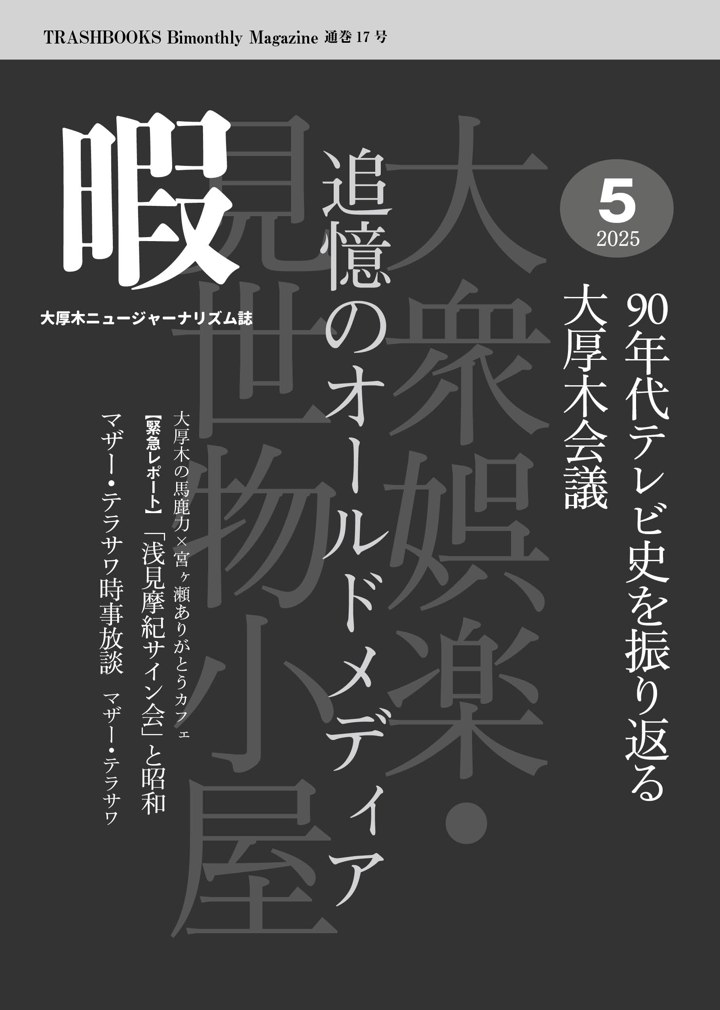
Front cover of HIMA, issue 17
NO. 17 May 2025

Remembering Old Media

A conversation between Kiyogappa Ojisan and Kentaro Sugimoto revisits Japanese television of the 1990s to ask where entertainment might go next. Late-night programmes, comedy and the changing experience of watching television lead into a discussion of live performance, spectacle and the appeal of unpredictable people. The issue also reports on Maki Asami’s book-signing event at Arigatō Café in Miyagase. Mother Terasawa examines the television industry and the position of comedians within it, connecting the crisis of established media with the question of what performers choose to overlook.

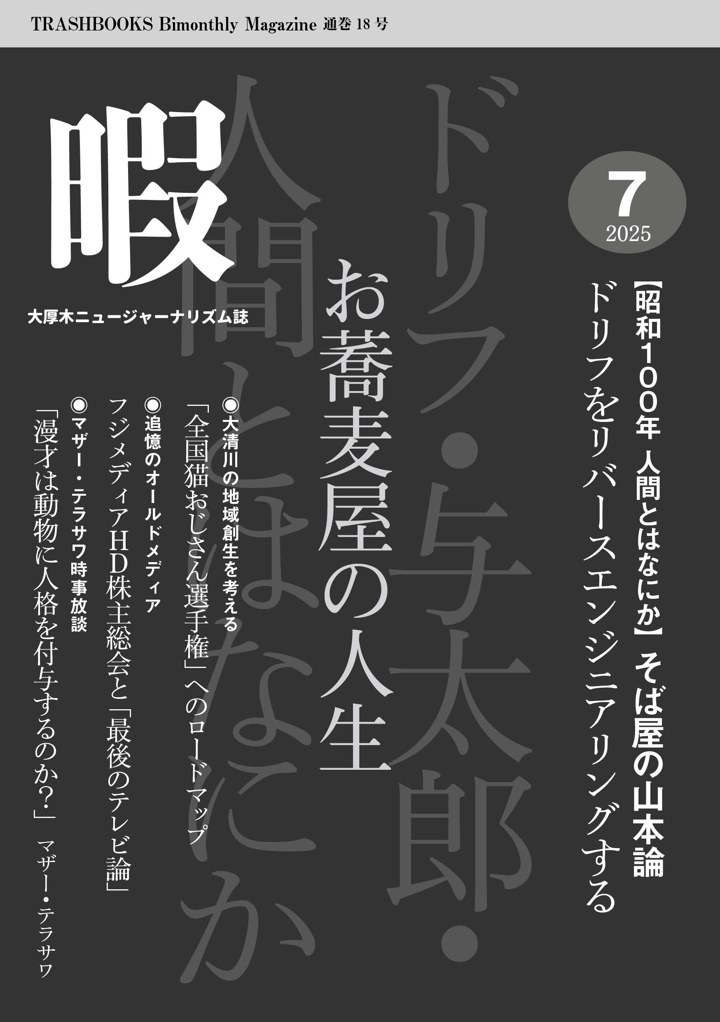
Front cover of HIMA, issue 18
NO. 18 July 2025

The Life of a Soba-Shop Owner

An eccentric soba-shop owner becomes the starting point for an inquiry into human character, comedy and the self. Sugimoto reads Makoto Yamamoto’s stories alongside the rakugo figure Yotarō, the tale Shibahama and the comedy of the Drifters. What might a person without the familiar apparatus of introspection reveal about how laughter works? Other features discuss local cultural activity in Kiyokawa and the proposed ‘National Cat-Uncle Championship’. Mother Terasawa’s column takes up the Fuji Media Holdings shareholders’ meeting and the future of television.

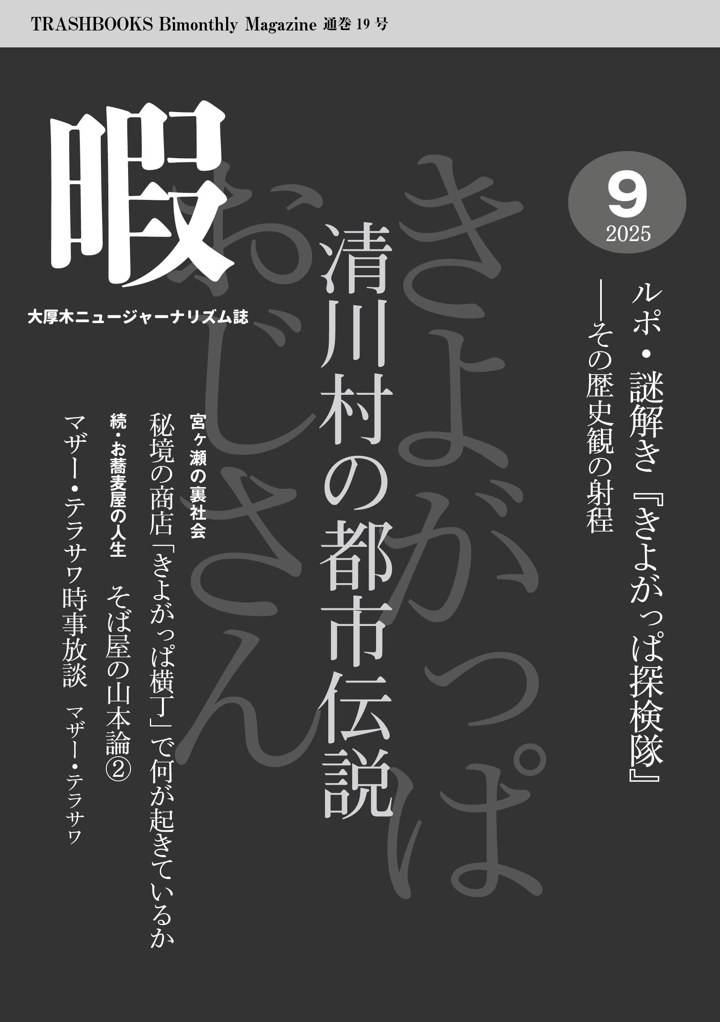
Front cover of HIMA, issue 19
NO. 19 September 2025

Urban Legends of Kiyokawa Village

A report on the picture-book project Kiyogappa Expedition explores how invented stories enter the memory of a place. Its unofficial kappa characters and imaginary hunting tribe coexist with recognisable local people, producing unexpected crossings between fiction, testimony and belief. Sugimoto asks how a newly created legend can begin to acquire the appearance of remembered history. The issue also includes boru.’s recollections of Ōiso and Mother Terasawa’s discussion of the 2026 World Baseball Classic and the movement of audiences away from terrestrial television.

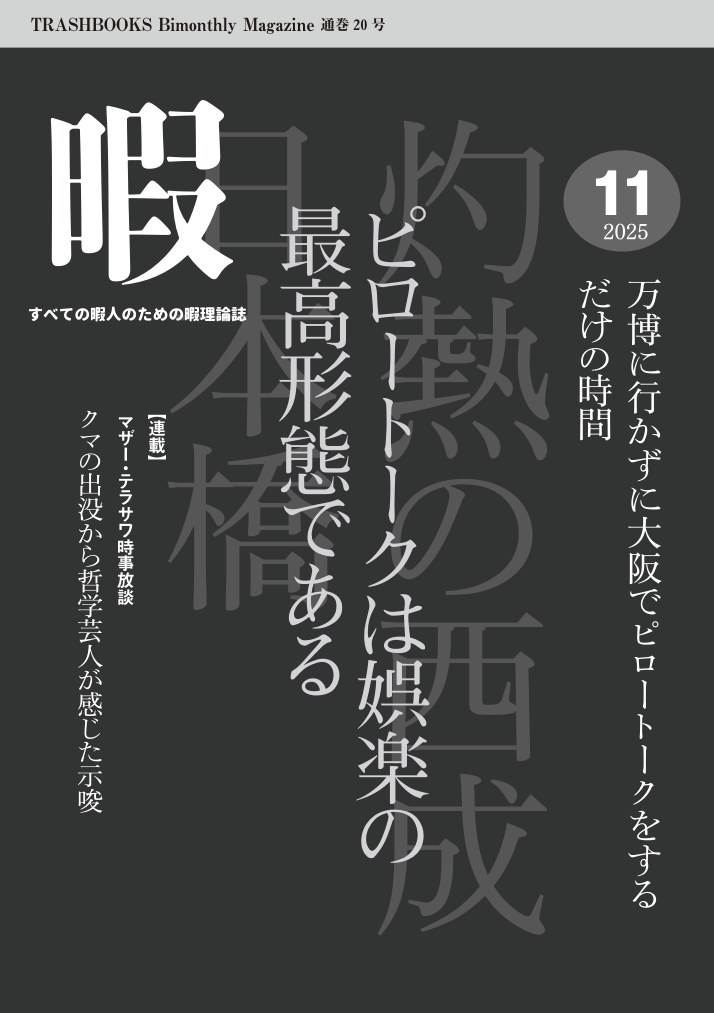
Front cover of HIMA, issue 20
NO. 20 November 2025

Scorching Nishinari

‘Pillow Talk Is the Highest Form of Entertainment’ follows a stay in Osaka’s Nishinari and Nipponbashi districts. A planned visit to the Expo gives way to wandering, drinking, encounters and intimate conversation. The report develops its argument through the time spent with particular people and the texture of the streets, asking what forms of pleasure emerge outside organised attractions and scheduled consumption. In his regular column, Mother Terasawa draws philosophical implications from the appearance of bears in human settlements.

Front cover of HIMA, issue 21
NO. 21 January 2026

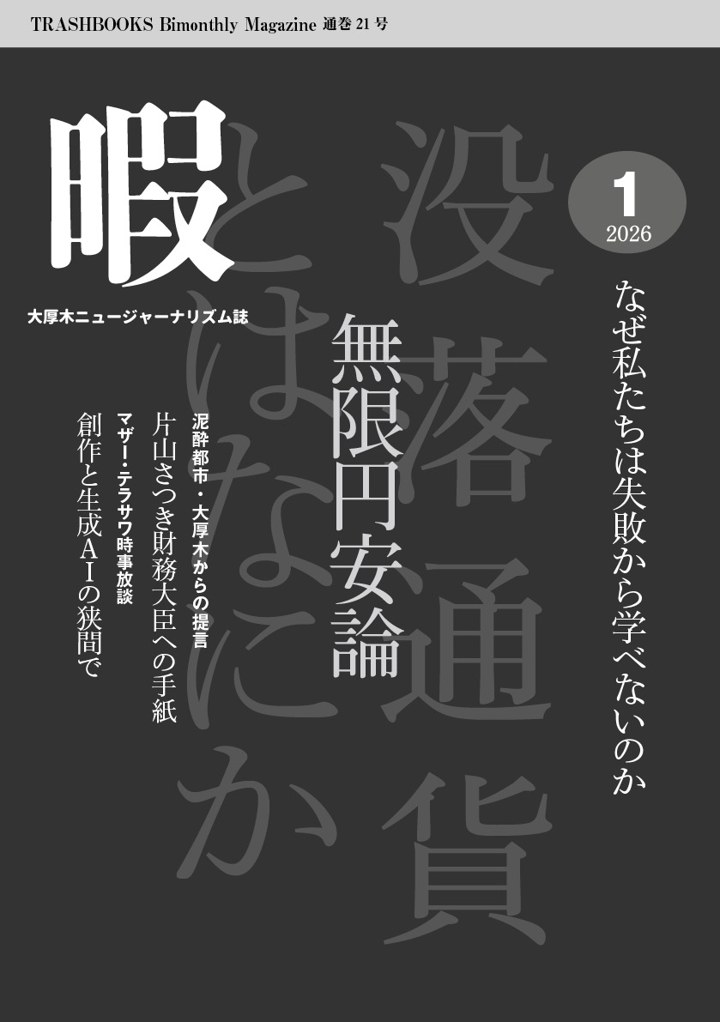
What Is a Currency in Decline?

The central feature, ‘The Theory of Endless Yen Depreciation’, examines the yen through market data, monetary policy and fiscal expectations. It questions explanations based solely on interest-rate differentials and connects currency decline with Japan’s difficulty in learning from failure. A letter addressed to Finance Minister Satsuki Katayama brings the discussion back to the magazine’s vantage point in Atsugi, its ‘drunken city’. Mother Terasawa’s contribution considers the space between creative work and generative AI.

Front cover of HIMA, issue 22
NO. 22 March 2026

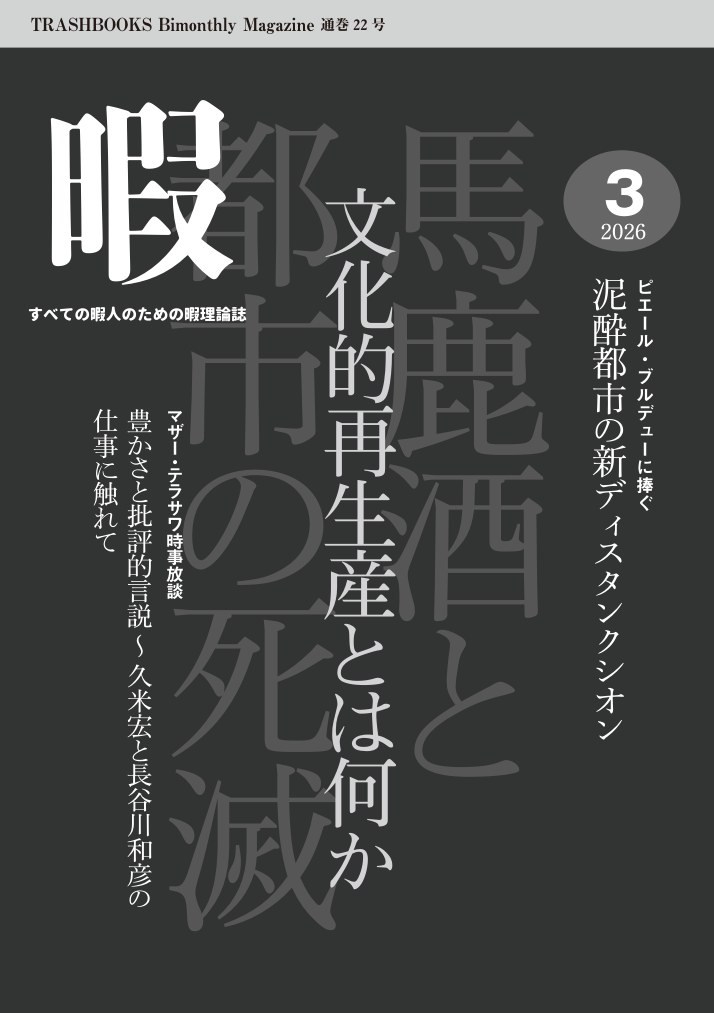
Reckless Drinking and the Death of the City

Dedicated to Pierre Bourdieu, this issue develops a ‘new Distinction of the drunken city’. Sugimoto returns to Atsugi’s buildings, convenience stores, drinkers and everyday encounters to investigate how cultural knowledge is embodied and passed on—and what happens when the settings that sustain it disappear. The contrasting fortunes of Atsugi and neighbouring Ebina bring urban redevelopment into the account of cultural reproduction. Mother Terasawa reflects on affluence and critical discourse through the work of broadcaster Hiroshi Kume and filmmaker Kazuhiko Hasegawa.

Front cover of HIMA, issue 23
NO. 23 May 2026

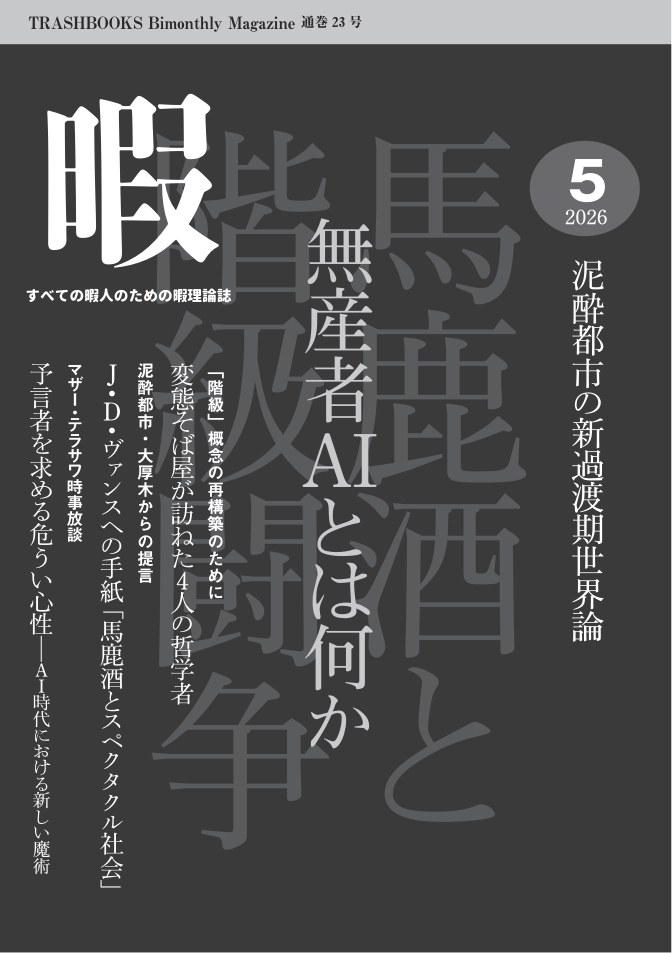
What Is Proletarian AI?

This issue reconstructs the question of class through the uneven use of artificial intelligence. Sugimoto distinguishes the AI embedded in corporate and state infrastructures from consumer systems, then examines divisions among individual users: paid access, technical capability, and the ability to bring one’s own experience into the work. Drawing on Marx’s discussion of machinery, the essay asks who possesses effective means of production when language itself is generated by platforms. Mother Terasawa considers AI, the formation of individual judgement and the continuing importance of philosophical reading.

Front cover of HIMA, issue 24
NO. 24 July 2026

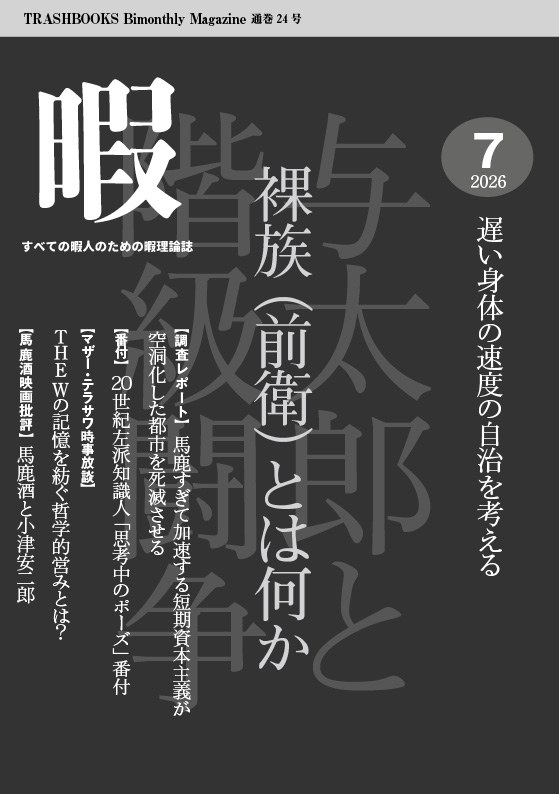
What Is the Naked Tribe (the Avant-Garde)?

The soba-shop owner returns as a challenge to philosophical accounts of hospitality and existing categories of class. Through explicitly fictional encounters at the doorsteps of Derrida, Hannah Arendt, Claude Lévi-Strauss and Louis Althusser, Sugimoto asks how theory responds to an inconvenient, drunken body that resists classification. The inquiry connects hospitality with the possibility of relationships that extend beyond established circles. Mother Terasawa’s column examines how a comedian’s recurring gag can preserve the memory of a television competition, drawing on Walter Benjamin’s thinking about history.

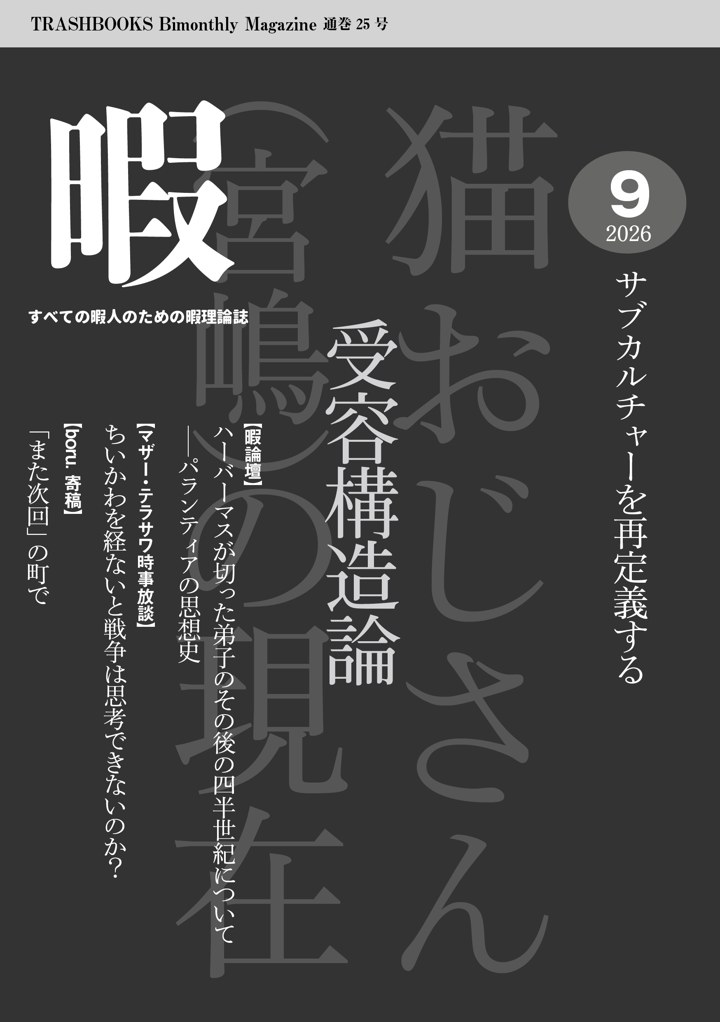
Front cover of HIMA, issue 25
NO. 25 September 2026

Structures of Reception: Redefining Subculture

What can ‘subculture’ mean when platforms have dissolved the distinction between mainstream and margin? Sugimoto proposes a structure of reception that preserves its own pace beyond the demand for instant judgement. A second major essay, ‘The Intellectual History of Palantir’, examines Alex Karp’s intellectual trajectory and his relationship to the tradition associated with Jürgen Habermas. Mother Terasawa asks whether war can now be contemplated only through Chiikawa. In ‘In a Town of “Next Time”’, musician boru. describes a small encounter that reveals a town moving at its own pace.

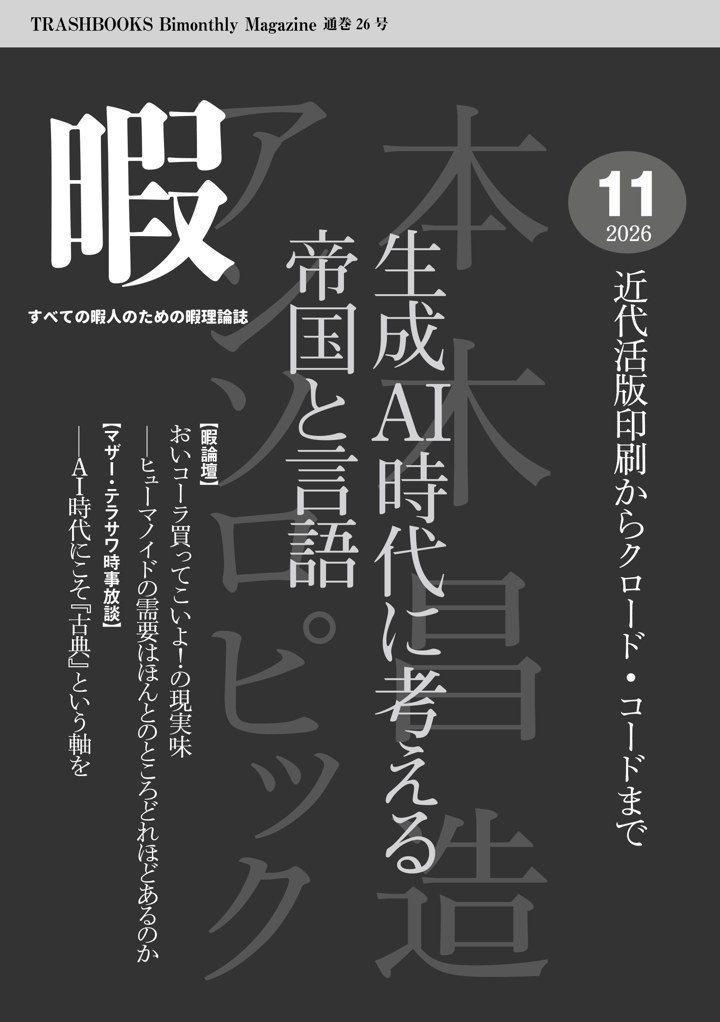
Front cover of HIMA, issue 26
NO. 26 November 2026 · In preparation

Empire and Language in the Age of Generative AI

The planned feature follows the relationship between language and technical infrastructure from modern Japanese letterpress printing to Claude Code. Current drafts connect the making and selection of type with the acquisition of books for AI training, asking how institutions and technologies shape the language available to users. ‘Hey, Go and Get Me a Coke!’ tests claims about demand for humanoid robots against ordinary household tasks. Mother Terasawa’s twenty-fifth column, ‘Why the AI Age Needs the Classics’, considers the place of sustained reading and classical thought in contemporary technological debate.